
When to Apply Pre-Emergent in Central Alabama
If you could only do one weed-control task all year, this would be it. Pre-emergent herbicide stops weeds before they ever sprout — and in Central Alabama, timing is everything. Apply too early and it wears off before weed seeds germinate. Apply too late and you’re locking the barn door after the horse is out. Here’s exactly when to put it down in Zone 8a.
How Pre-Emergent Actually Works
Unlike the weed killers you spray on visible weeds (those are post-emergents), pre-emergent forms an invisible chemical barrier in the top layer of soil. When a weed seed tries to germinate and push through that barrier, it’s stopped. The key word is *before* — it does nothing to weeds that are already growing.
That barrier breaks down over about 8 to 12 weeks, which is why timing your application to match weed germination is the whole game.
It’s also worth knowing what pre-emergent is *not*. It won’t kill existing weeds, it won’t help with nutsedge (which sprouts from underground tubers, not seeds), and it won’t fix a lawn that’s already thin and patchy. Think of it as one layer of a weed-control strategy: pre-emergent handles the seeds, proper mowing height and a thick lawn handle most of the rest, and targeted spot-spraying cleans up whatever slips through.
The Spring Window: Late February to Early April
In the Montgomery area, crabgrass and other summer annual weeds germinate when soil temperatures hold around 55°F for several days. In Zone 8a, that typically happens from late February through early April.
A handy local cue: when forsythia bushes start blooming, soil temps are right. Many lawn pros in Prattville and Millbrook target early-to-mid March as the sweet spot — early enough to catch the first wave of germination, late enough that the barrier lasts into early summer. If you only do one application a year, make it this one.
One mistake to avoid: applying pre-emergent and fertilizer in a single “weed and feed” pass too early in the season. If the pre-emergent goes down in February but the grass isn’t growing yet, you’re feeding weeds, not grass. It’s often better to handle the pre-emergent on its own schedule and fertilize when the lawn is actively greening up a few weeks later.
The Fall Window: September to October
The fall application is the one most homeowners skip, and it’s arguably just as important. Winter annual weeds — annual bluegrass (Poa annua), henbit, chickweed — germinate in the fall when soil temperatures drop back through the 70s. A September to October pre-emergent application blocks them before winter.
Lawns that get both spring and fall applications are dramatically cleaner year-round than lawns that only get one. If your lawn explodes with weeds every February, a missed fall application is almost certainly why.
What Happens If You’re Late
Missed the window? Don’t panic — but adjust your plan. Pre-emergent won’t kill weeds that have already sprouted, so a late spring application means you’ll need to spot-treat emerged crabgrass with a post-emergent product instead. It’s more work and less effective than prevention, but it still helps with later-germinating weeds.
One important rule: never apply pre-emergent where you’re trying to grow new grass seed at the same time. It can’t tell the difference between a weed seed and the grass seed you just planted — it will block both. Seed first, wait for the new grass to establish, then apply.
Application Tips That Actually Matter
- Water it in. Most granular pre-emergents need about half an inch of rain or irrigation within a few days to activate the barrier.
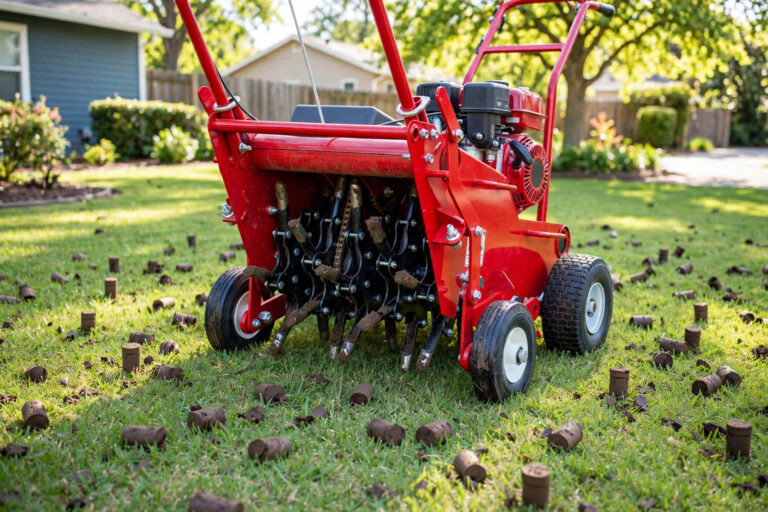
- Don’t disturb the soil afterward. Aerating, dethatching, or digging after application breaks the barrier and lets weeds through. Aerate first, then apply.
- Measure your lawn. Over-application wastes money and can stress the grass; under-application leaves gaps. Know your square footage.
- Use a calibrated spreader. A consistent, even application matters more than the brand name on the bag.
- Keep a simple record. Note the date you applied it — you’ll want to know when the barrier wears off.
The Bottom Line
In Central Alabama: pre-emergent down in early spring (late Feb–early Apr) for summer weeds, and again in fall (Sep–Oct) for winter weeds. Hit both windows and you’ll spend your weekends enjoying the lawn instead of fighting it. For the full year-round schedule, see our Montgomery, AL lawn care calendar.
If this feels like a lot to track, you’re not alone — timing is the number one reason homeowners miss pre-emergent windows. A professional treatment program takes the calendar-watching off your plate entirely, with applications timed to soil conditions rather than guesswork.
Rather have a pro handle the timing? Call Lawn Care Montgomery at (334) 719-0646. Our treatment programs include properly timed pre-emergent applications for lawns across Montgomery, Pike Road, Prattville, Millbrook, and Wetumpka.
2 Comments
Comments are closed.