Lawn Aeration in Montgomery, AL: When & Why
If your lawn looks tired despite decent watering and fertilizing — thin in high-traffic areas, water pooling after rain, fertilizer that doesn’t seem to do much — the problem might be underneath the surface. Literally. Compacted soil is one of the most common and most overlooked lawn problems in Central Alabama, and core aeration is the fix. Here’s why it matters, when to do it, and what to expect from a professional visit.
What Core Aeration Actually Does
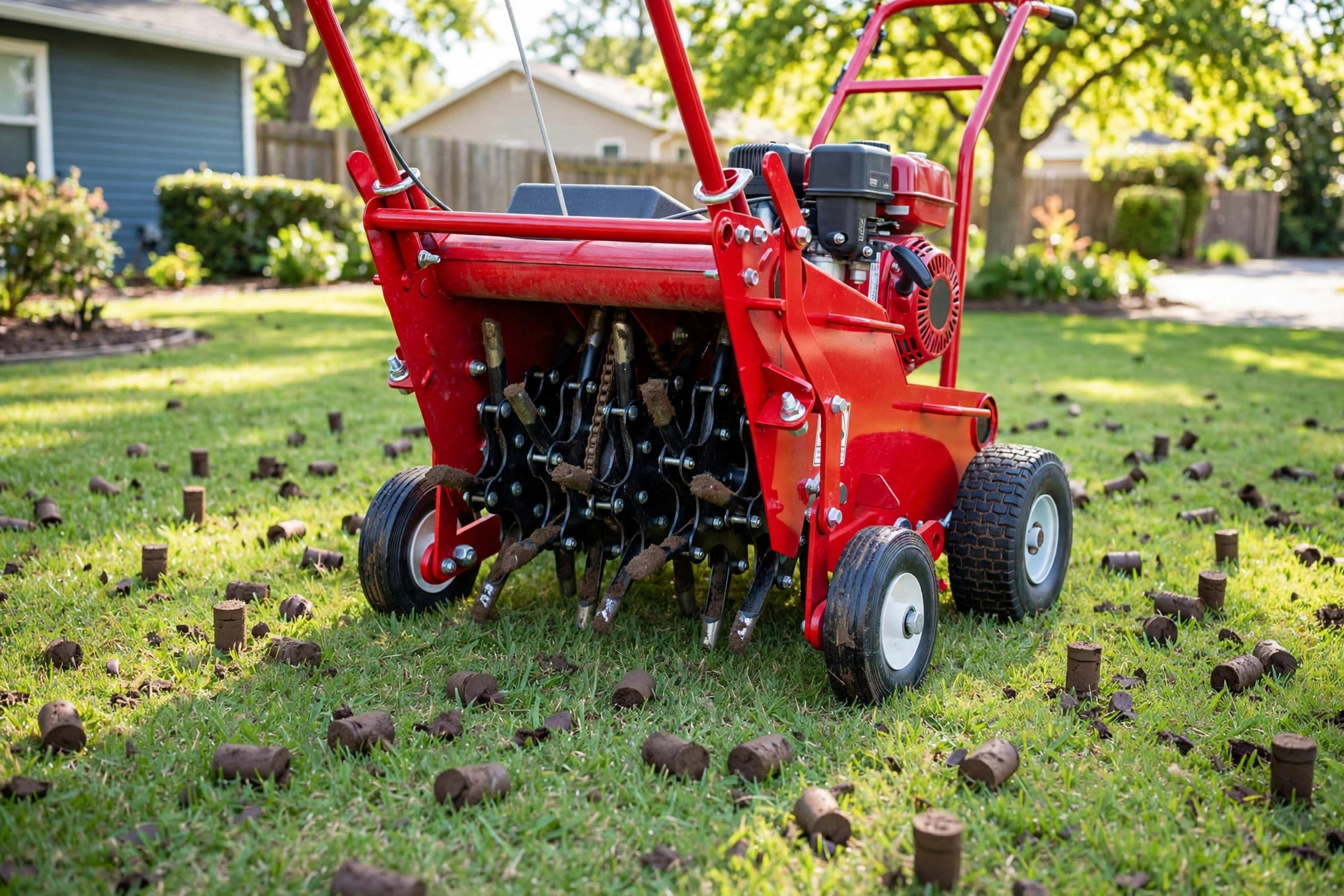
Core aeration is exactly what it sounds like: a machine pulls thousands of small plugs of soil — about the size of your finger — out of the lawn, leaving holes roughly two to three inches deep. Those holes are the whole point. They open channels for air, water, and nutrients to reach the root zone, and they give roots room to expand into loosened soil.
The plugs left on the surface look messy for a week or two, but they break down and return valuable soil and microorganisms to the lawn. Within a few weeks, you can’t tell it was done — but the grass can.
This is different from “spike aeration” (a roller with spikes that pokes holes without removing soil). Spiking can actually make compaction worse around each hole. When lawn pros in this area say “aeration,” they mean core aeration. Accept no substitutes.
Why Our Clay Soil Needs It
Much of the Montgomery area sits on heavy clay soil, and clay compacts. Foot traffic, kids playing, dogs running the same path, mowers rolling the same route week after week, even just rain beating down on bare spots — it all presses the tiny clay particles tighter together until air and water can’t move through.
Compacted soil causes a cascade of problems: roots stay shallow because they can’t push through, water runs off instead of soaking in, fertilizer sits on the surface instead of reaching roots, and the stressed, shallow-rooted grass becomes an easy target for weeds, disease, and drought. If you’ve ever wondered why the grass along your walkway or where the kids play always looks worse, compaction is usually the answer.
The Best Time to Aerate Warm-Season Grass
Timing matters because aeration is stressful in the short term — you’re punching holes in the lawn, after all. You want the grass growing vigorously so it recovers fast.
For Bermuda, Zoysia, and Centipede in Zone 8a, the sweet spot is late spring through early summer — roughly May through June in the Montgomery area. The grass is in active growth, soil moisture is usually cooperative, and the lawn has the entire summer to fill in the holes with strong new growth.
Fall (September) is the second-best window and works well, especially when paired with overseeding thin areas or applying pre-emergent afterward.
Avoid aerating warm-season grass in late fall or winter when it’s dormant — the holes just sit there open with no recovery happening — and avoid peak August heat when the grass is already stressed.
What a Professional Aeration Visit Looks Like
Knowing what to expect takes the mystery out of the service:
1. The technician walks the lawn first, noting compacted areas, sprinkler heads, shallow utility lines, and spots to focus on or avoid.
2. Sprinkler heads and hidden obstacles get marked with small flags so the machine doesn’t damage them.
3. The aerator makes overlapping passes across the entire lawn, pulling plugs on a tight pattern — typically aiming for good, even coverage rather than rushing through.
4. High-traffic and compacted areas get extra attention with additional passes where the soil needs it most.
5. The plugs stay on the lawn to break down naturally. Some companies offer to top-dress with compost or sand afterward for an extra boost, which is worth considering on heavy clay.
A typical suburban lawn takes under an hour of machine time. You’ll want to water the lawn the day before the visit if the ground is bone dry — the machine pulls cleaner plugs from moist (not muddy) soil.
How Often Does Your Lawn Need It?
For most lawns in the Montgomery area, once a year is the right cadence. Lawns with heavy clay, high foot traffic, or persistent drainage issues benefit from twice a year — spring and fall.
You’ll know it’s working when water soaks in instead of pooling, the grass thickens in previously thin areas, and fertilizer seems to “take” better. Those are all signs the root zone is breathing again.
One honest note: aeration is powerful, but it’s not a standalone miracle. It works best as part of a program — aerate in spring or fall, follow with proper fertilization, and keep up with weed control. The combination is what transforms a struggling lawn.
After Aeration: What to Do Next
The week after aeration is prime time for everything good:
- Water normally. The holes help water reach the roots — don’t let the lawn dry out while it recovers.
- Leave the plugs. They look untidy for 7–14 days, then crumble back into the lawn. Mowing over them once they’ve dried speeds the breakdown.
- Fertilize if it’s the right season. Nutrients now go straight to the root zone through the holes — it’s the most efficient feeding of the year.
- Seed thin spots now if needed. Seed-to-soil contact is excellent in aeration holes, making fall aeration plus overseeding a powerful combination.
- Hold off on pre-emergent for a bit if you aerate in fall — aerating after a pre-emergent application breaks the chemical barrier. Aerate first, then apply.
The Bottom Line
If your Montgomery lawn is compacted — and on our clay soil, it probably is — core aeration is one of the highest-impact services you can buy. Once a year, timed to active growth, and your roots finally get the air, water, and nutrients they’ve been missing.
Ready to give your lawn room to breathe? We provide core aeration service across Montgomery, Pike Road, Prattville, Smiths Station, and Montgomery County, Monday through Saturday. Call Lawn Care Montgomery at (334) 719-0646.
Related reading: aeration works best as part of a full plan — see our month-by-month lawn care calendar for where it fits in the year.