
Bermuda Grass Care Guide for Alabama Lawns
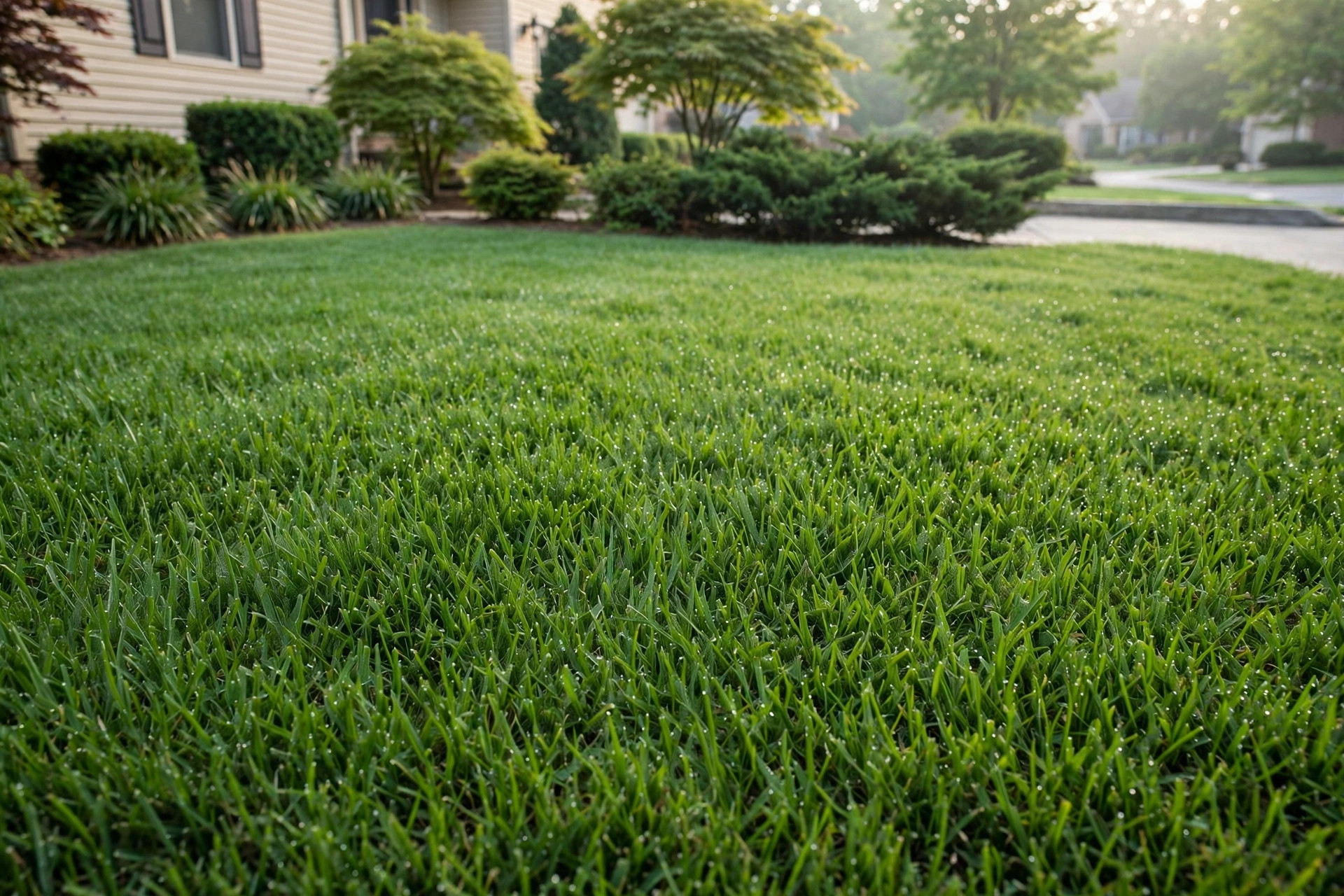
Bermuda is the undisputed king of Alabama lawns. It covers more yards in the Montgomery area than every other grass combined — and for good reason. It loves our heat, recovers from damage faster than anything else, and delivers that classic dense, dark-green Southern lawn when it’s cared for properly. The catch: Bermuda is also the most demanding common grass in the state. It rewards attention and punishes neglect. Here’s how to give it what it wants.
Why Bermuda Dominates Alabama Lawns
Bermuda evolved for exactly this climate — full sun, high heat, long growing season. In North and Central Alabama, it greens up early in spring, grows aggressively through summer, and spreads by both above-ground runners (stolons) and below-ground rhizomes, which is why it fills in bare spots faster than any alternative.
That aggressiveness is a double-edged sword. It’s why Bermuda recovers from kid traffic, dog wear, and even moderate grub damage better than Zoysia or Centipede. It’s also why it invades flower beds relentlessly and why a neglected Bermuda lawn turns into a thatchy, weedy mess faster than you’d expect. Bermuda doesn’t do “low maintenance” — it does “high reward for high effort.”
Mowing: Height and Frequency
This is where most Bermuda lawns go wrong. Bermuda wants to be mowed short and often — but there’s a critical distinction between short and scalped.
- Rotary mower: keep it at 1.5 to 2 inches during the growing season
- Reel mower: can go down to 1 to 1.5 inches for that golf-course look, if you’re committed to mowing every few days
The real rule is frequency: never remove more than one-third of the blade in a single cut. In peak season (May through July), that means mowing twice a week for most Montgomery-area Bermuda lawns. Mow weekly and you’ll be breaking the one-third rule constantly, leaving the lawn stressed and scalped in patches.
Keep your blades sharp — Bermuda shows dull-blade damage as brown, frayed tips more obviously than any other grass. And alternate your mowing direction to prevent grain and ruts.
One more thing: Bermuda goes dormant and brown in winter. That’s normal, not a problem. Don’t try to force it green with winter fertilizer — you’ll feed the weeds, not the grass.
Watering Bermuda the Right Way
Bermuda is drought-tolerant once established, but “tolerant” and “looks good” are different things. For a lawn that stays thick and green through an Alabama summer, aim for about 1 to 1.5 inches of water per week, delivered in one or two deep soakings rather than daily sprinkles.
Deep, infrequent watering trains roots to grow downward, which is exactly what you want heading into August heat. Shallow daily watering trains roots to stay at the surface, where they’re vulnerable to the first dry spell.
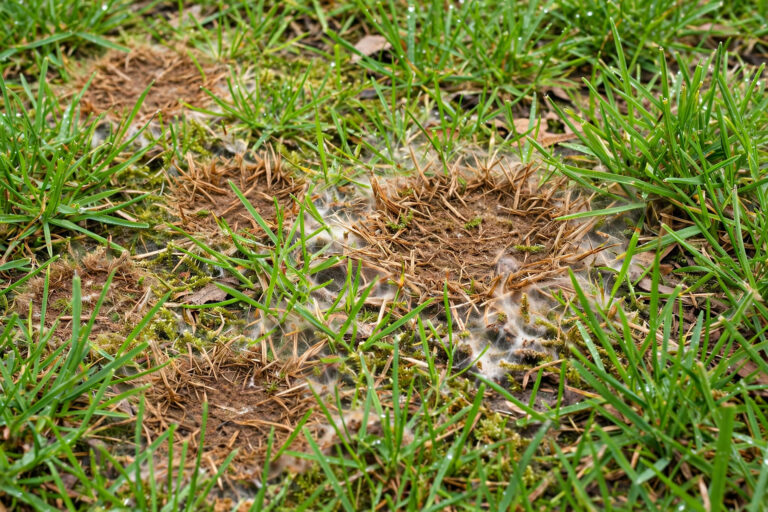
Always water in the early morning — ideally finishing before 10 AM. Evening watering leaves blades wet overnight, and in our humidity that’s an open invitation for brown patch fungus, which loves Bermuda. If you’re running irrigation, a rain sensor or smart controller pays for itself by skipping cycles after our summer downpours.
Feeding Bermuda (Without Overdoing It)
Bermuda is the hungriest common lawn grass in Alabama, and it shows when it’s underfed — thinning, pale color, and weeds moving into the weak spots. But “hungry” doesn’t mean “dump fertilizer on it constantly.”
A solid annual program for Central Alabama Bermuda:
- Spring green-up (March–April): balanced feeding as growth resumes
- Early summer (May–June): the heaviest feeding of the year — this is when Bermuda builds the density that carries it through summer
- Mid-summer (July): light feeding only if the lawn is healthy and watered; skip if stressed
- Early fall (September): recovery feeding to repair summer wear
- Late fall (October–November): winterizer for root energy through dormancy
Prefer slow-release nitrogen — it feeds evenly for weeks instead of the surge-and-crash of quick-release products. And get a soil test every couple of years. Much of the Montgomery area has acidic clay soil, and Bermuda struggling in low pH won’t respond to fertilizer no matter how much you apply. Lime is often the real fix.
Dealing with Dormancy
From roughly November through February, Bermuda goes dormant and turns tan-brown. First-time Alabama homeowners sometimes panic; don’t. The grass is alive underground, waiting for spring soil temperatures.
During dormancy: keep the lawn clear of heavy leaf cover (a thick mat smothers crowns), stay off it when frost is on the ground, and resist fertilizing. Winter weeds like Poa annua will try to move in — that’s what your fall pre-emergent application was for. A dormant Bermuda lawn with good winter weed control looks tidy and intentional, not neglected.
Green-up typically starts in March as soil temperatures climb. Be patient — scalping the lawn “to help it green up faster” is a myth that just stresses the emerging grass.
Common Bermuda Problems in Alabama
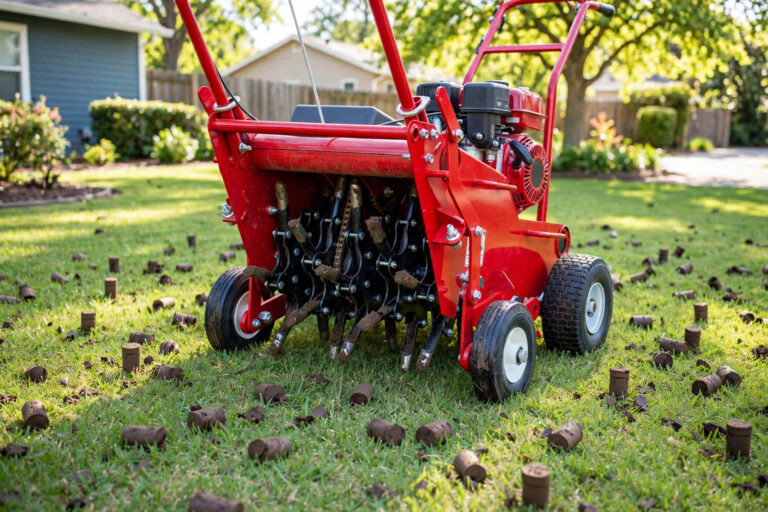
Thatch buildup. Bermuda’s aggressive growth creates thatch — a spongy layer of dead stems between the grass and the soil. More than half an inch of thatch blocks water and harbors disease. Dethatch or verticut every 2–3 years, ideally in late spring when the grass is growing strongly enough to recover fast.
Weed invasion. Crabgrass, dallisgrass, and goosegrass all love Bermuda’s sunny, open canopy. Spring and fall pre-emergent applications are non-negotiable for Bermuda — more so than for denser grasses like Zoysia.
Shade thinning. Bermuda needs 6–8 hours of direct sun. Under Montgomery’s oaks and pines, it thins out no matter what you do. If a section gets less than six hours, you’re fighting nature — consider shade-tolerant groundcover or mulch beds there instead of pouring products on a losing battle.
Scalping. Mowing too low or mowing infrequently then cutting off too much at once. The brown, stemmy patches after a scalp take weeks to recover. Prevention is just consistent mowing at the right height.
Spring dead spot. Circular dead patches appearing in spring on older Bermuda lawns — a fungal disease (Ophiosphaerella) that needs professional diagnosis and a targeted fungicide program. If the same dead circles return every spring, get it checked rather than reseeding over them.
Is Bermuda Right for Your Yard?
Bermuda is the right choice if you have full sun, don’t mind mowing often, and want the toughest, fastest-recovering lawn available in Alabama. It’s the wrong choice for shady lots, for anyone wanting a low-mowing routine, or for areas where its aggressive spreading into beds will drive you crazy.
Already have Bermuda and struggling with it? Most Bermuda problems come down to three things: mowing too infrequently, fertilizing at the wrong times, or fighting shade it can’t win. Fix those and the grass usually does the rest.
Want a Bermuda lawn that actually looks like the pictures? Our treatment programs are built around what Bermuda needs in Central Alabama — properly timed fertilization, weed control, and grub prevention. Call Lawn Care Montgomery at (334) 719-0646.
Related reading: still choosing between grasses? Read our Bermuda vs Zoysia vs Centipede comparison, and time your feedings with our fertilization schedule.
One Comment
Comments are closed.