
Lawn Fertilization Schedule for Montgomery, AL
Ask ten homeowners in Montgomery when to fertilize their lawn and you’ll get ten different answers — which explains why so many lawns here are simultaneously overfed and undernourished. Fertilization isn’t complicated, but it is timed. Feed warm-season grass when it’s hungry and it thrives; feed it when it’s dormant or stressed and you’re mostly feeding the weeds. Here’s the schedule that actually works in Zone 8a.
Why Timing Matters More Than the Bag
Here’s the core principle: grass can only use fertilizer when it’s actively growing. Warm-season grasses in Central Alabama grow vigorously from roughly April through September, slow down in October, and go dormant from about November through February.
Fertilizer applied during active growth gets converted into thicker turf, deeper roots, and better color. The same fertilizer applied to dormant grass mostly sits there — or worse, leaches away with winter rain, or feeds winter weeds that are happy to take it. And fertilizer dumped on heat-stressed grass in peak August can actually damage it, pushing tender growth when the plant is just trying to survive.
So the schedule below isn’t arbitrary. It follows the grass.
What the Numbers Mean (30-Second Version)
Every fertilizer bag shows three numbers — nitrogen, phosphorus, potassium. Here’s all you need to know:
- Nitrogen (the first number) drives green growth and is what lawns need most. This is the workhorse nutrient.
- Phosphorus (the middle number) supports root development. Most established Alabama lawns already have enough — a soil test tells you for sure.
- Potassium (the last number) helps with stress tolerance, disease resistance, and winter hardiness. It matters most in fall applications.
For routine lawn feeding in Montgomery, a balanced fertilizer or one weighted toward nitrogen is the standard choice. The exact analysis matters less than most people think; the timing and the rate matter more.
The Zone 8a Fertilization Calendar
Early spring (March–April): The first feeding goes down as the grass greens up and starts active growth. This is a balanced application — enough nitrogen to fuel spring fill-in without pushing excessive top growth. Don’t fertilize before the grass is actually growing; feeding dormant turf is one of the most common mistakes we see.
Late spring to early summer (May–June): The main growth feeding. Warm-season grass is at peak appetite now, and this application builds the density that carries the lawn through summer. For Bermuda lawns — which are heavy feeders — this is the most important feeding of the year.
Mid-summer (July): Light touch only, and only if the lawn is healthy and irrigated. Skip it entirely if the grass is heat-stressed or you’re not watering. Feeding stressed grass in 95-degree heat does more harm than good.
Early fall (September): An important feeding that helps the lawn recover from summer stress and thicken up before growth slows. This is also when potassium earns its keep, building stress tolerance.
Late fall (October–November): The winterizer. Applied while the grass is still slightly active but top growth has slowed, this feeding goes largely to the roots, storing energy for a faster, thicker green-up in spring. Don’t skip this one — it’s the highest-return application of the year.
That’s four to five feedings across the season. More is not better; correctly timed is better.
Slow-Release vs Quick-Release: What to Use
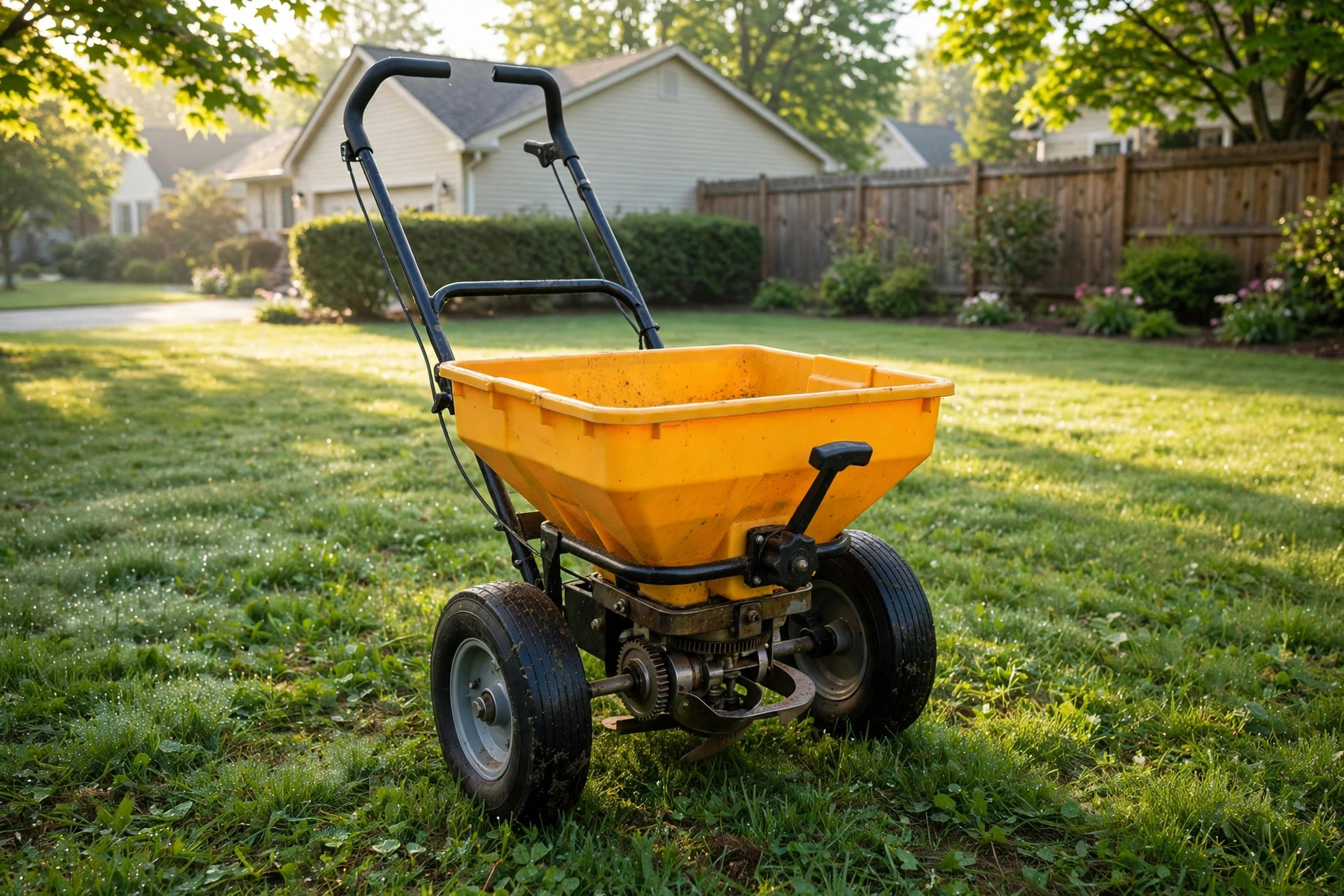
Slow-release (controlled-release) fertilizers meter out nutrients over 6 to 10 weeks. They cost more per bag but feed more evenly, are far more forgiving of application mistakes, and dramatically reduce the risk of burning the lawn. For homeowners and most professional programs in our area, slow-release is the right default.
Quick-release fertilizers dump their nitrogen fast — green-up in days, gone in weeks. They have their place (a quick color boost before an event, for example), but the surge-and-crash cycle stresses grass and the burn risk is real, especially in our summer heat.
If you’re buying your own fertilizer in the Montgomery area, the bag should say “slow-release” or “controlled-release” nitrogen somewhere on the label. If it doesn’t, assume it’s quick-release and handle accordingly.
The Mistakes We See Most
After years of looking at lawns across Montgomery, Pike Road, and Prattville, the same fertilization errors show up again and again:
- Feeding dormant grass in January or February because “it’s almost spring.” The grass can’t use it; the weeds can.
- The summer nitrogen blast — dumping heavy fertilizer on a heat-stressed July lawn and wondering why it looks worse.
- More is better thinking. Doubling the rate doesn’t double the results; it doubles the burn risk and the runoff.
- Never soil testing. A $10–15 soil test every couple of years tells you exactly what your lawn needs. Many Central Alabama soils are acidic enough to lock out nutrients no matter how much fertilizer you apply — and no amount of product fixes a pH problem.
- Fertilizing without watering it in. Granular fertilizer sitting on dry grass blades can burn; a quarter inch of irrigation after application moves it into the soil where it belongs.
Soil Testing: The Step Everyone Skips
This deserves its own emphasis because it’s the highest-value, lowest-cost thing in lawn care. Your local extension office offers soil testing that reports pH and nutrient levels with specific recommendations for your lawn. In our area, the results frequently surprise people — commonly revealing pH low enough to need lime, or phosphorus levels already so high that the standard “balanced” fertilizer is the wrong choice.
Fertilizing without a soil test is guessing. Guessing is expensive.
The Bottom Line
Fertilize when the grass is growing, go easy in peak heat, never skip the fall winterizer, prefer slow-release products, and get a soil test every couple of years. That’s the entire philosophy — and it works on every warm-season lawn in Zone 8a.
Rather have a pro handle the schedule? Our lawn treatment programs include properly timed fertilization across Montgomery, Pike Road, Prattville, Millbrook, and Wetumpka. Call Lawn Care Montgomery for a free quote at (334) 719-0646.
Related reading: see where each feeding fits in our Montgomery lawn care calendar, or let a lawn treatment program handle the schedule for you.

One Comment
Comments are closed.