Lawn Disease & Fungus Control in Montgomery, AL
Central Alabama is just about perfect for lawn fungus: long hot summers, high humidity, warm nights, and frequent rain. If you grow warm-season grass here, disease pressure isn’t a question of if but when — and how you respond makes the difference between a lawn that bounces back and one that needs major repair. This guide covers how professional lawn disease treatment works in the Montgomery area, when preventative fungicide makes sense, and when it’s time to call for help.
Why Montgomery Lawns Get Hit So Hard
Fungus needs three things: a susceptible host, the pathogen itself, and the right environment. In Montgomery, the environment does most of the work. Nighttime temperatures that stay in the 70s, humidity that rarely drops, and heavy summer rains create ideal conditions for turf disease from roughly May through September.
Certain habits make it worse. Evening watering leaves grass blades wet all night — exactly what fungus wants. Mowing too short stresses the grass and opens it to infection. Over-fertilizing with quick-release nitrogen produces soft, lush growth that’s practically an invitation to brown patch. And poor air circulation from dense tree lines or fences keeps moisture trapped at the surface.
The pathogens themselves are already in every lawn. Brown patch, dollar spot, and gray leaf spot fungi live in the soil and thatch of most Central Alabama yards, waiting for the right conditions. You can’t eliminate them — but you can keep them from taking over.
The Diseases We Treat Most in Central Alabama
A few culprits account for most of the damage we see:
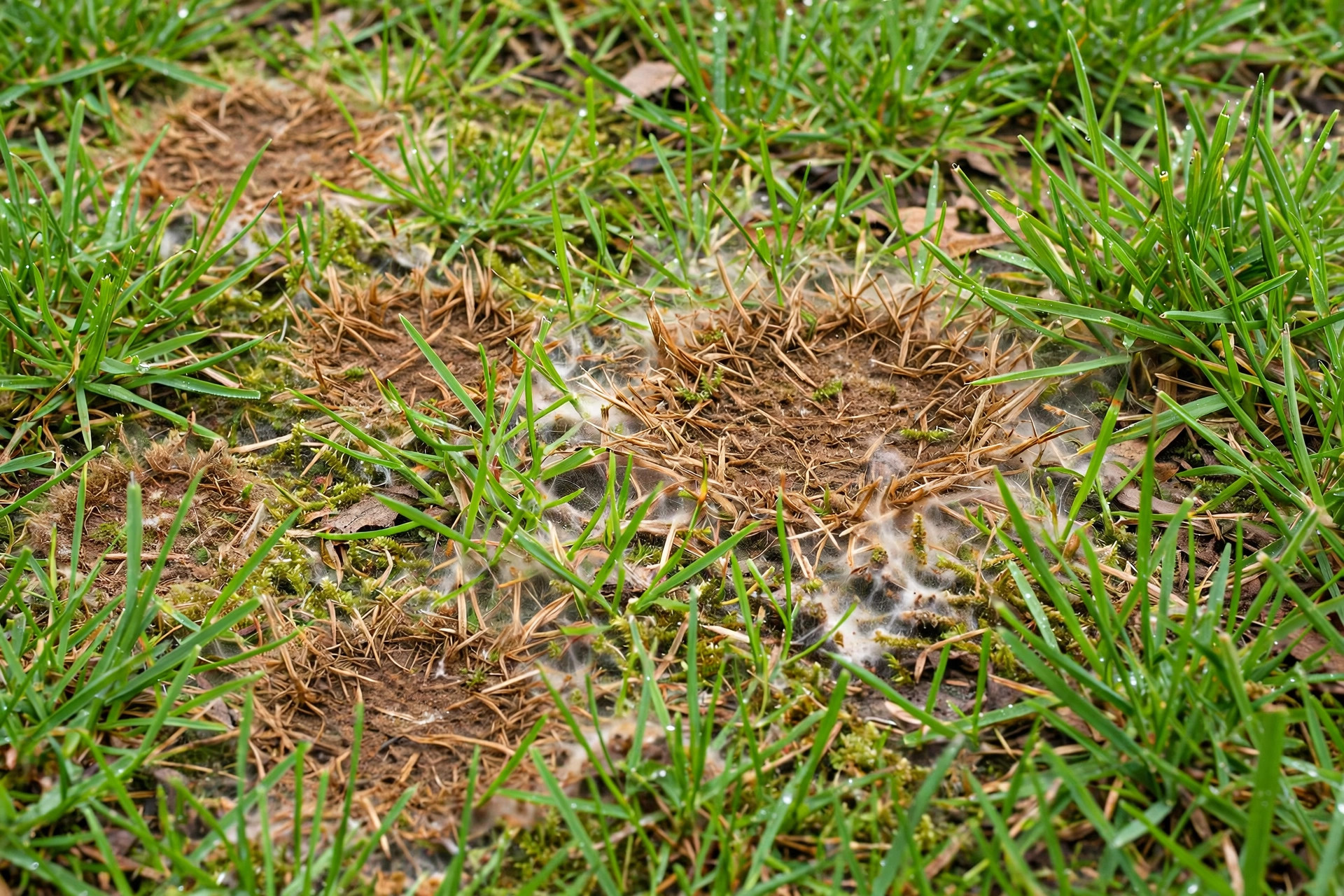
Brown patch is the heavyweight. It strikes in hot, humid weather, creating circular patches from a few inches to several feet wide, sometimes with a darker ring at the edge in the morning. It hits all our warm-season grasses but is especially rough on tall fescue and St. Augustine where those are planted.
Dollar spot shows up as small, silver-dollar-sized bleached spots that merge into larger damaged areas. It prefers warm days, cool nights, and — notably — under-fertilized lawns. A nitrogen-deficient lawn is a dollar spot magnet.
Gray leaf spot targets St. Augustine and sometimes Centipede in late summer, starting as small dark spots on blades that expand into blighted patches. It spreads fast in wet weather.
Large patch is the cool-season cousin of brown patch, hitting Zoysia and Centipede in spring and fall when temperatures are mild but moisture is high.
Knowing which disease you’re dealing with matters because treatments differ — but accurate identification is genuinely tricky, and misdiagnosis leads to wasted money on the wrong product. That’s one of the strongest arguments for professional evaluation.
Preventative vs Curative: Two Very Different Approaches
This is the most important concept in lawn disease management, so let’s be clear about it.
Preventative fungicide goes down before disease appears, on a schedule through the high-risk months. It protects healthy grass from infection. For lawns with a history of disease — and in our climate, that’s a lot of lawns — a preventative program running roughly May through September keeps problems from ever getting started. It’s the approach golf courses and sports fields use, for good reason: it works.
Curative fungicide is applied after symptoms appear, to stop an active outbreak. It can halt the spread, but it can’t resurrect dead grass — damaged areas still need time and good growing conditions to fill back in. Curative treatment is also more expensive per application and sometimes needs repeat visits.
The honest math: preventing disease costs less than curing it, and the results are dramatically better. A lawn that never gets brown patch looks infinitely better in August than a lawn that got brown patch and was treated. If your lawn has had fungus two years running, preventative treatment isn’t upselling — it’s the rational choice.
What a Professional Fungicide Program Looks Like
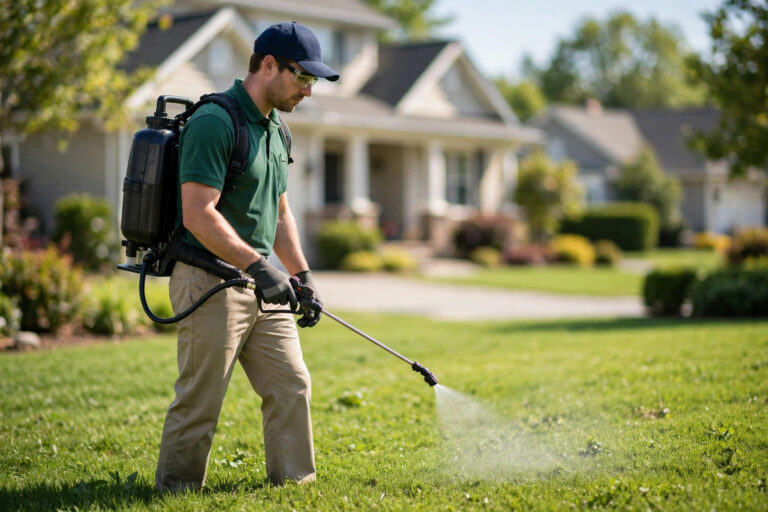
A residential fungicide service in Montgomery typically runs through the disease season with applications every 3 to 4 weeks from late spring into early fall. Here’s what separates a real program from a one-off spray:
- Rotation of active ingredients. Fungi develop resistance when the same chemistry is used repeatedly. Pros rotate between different fungicide classes through the season — something almost no DIY effort does.
- Correct rates and coverage. Under-application is the most common DIY failure; the product never reaches effective levels. Pros calibrate for your exact square footage.
- Disease scouting. A technician walking your lawn every few weeks spots the earliest signs — the faint yellowing, the subtle thinning — before you’d ever notice from the driveway. Early detection means lighter, cheaper treatment.
- Cultural recommendations. The best programs pair treatment with advice: adjust your watering schedule, raise the mowing height, improve air flow. Fungicide without fixing the underlying conditions is a treadmill.
When to Call a Pro vs Handle It Yourself
You can reasonably handle a small, first-time outbreak yourself with a quality fungicide from a garden center — if you’re confident about the diagnosis and you act fast. Where homeowners get into trouble:
- The problem keeps coming back year after year (you need prevention, not another curative spray)
- Large areas are affected (by the time it’s widespread, professional-strength products and proper coverage matter)
- You’re not sure what the disease actually is (wrong product = wasted money + lost time while it spreads)
- You’ve already tried treating it and it’s getting worse
There’s also a simple time calculation. By the time most homeowners notice fungus, buy a product, figure out the spreader settings, and apply it, a week or more has passed — and in July humidity, a week is an eternity for disease spread.
Prevention Habits That Reduce Disease Pressure
Whether or not you use a fungicide program, these habits cut your disease risk significantly:
- Water in the early morning only. Grass that dries by midday gives fungus far less opportunity. Evening watering is the single biggest cultural mistake in Alabama lawns.
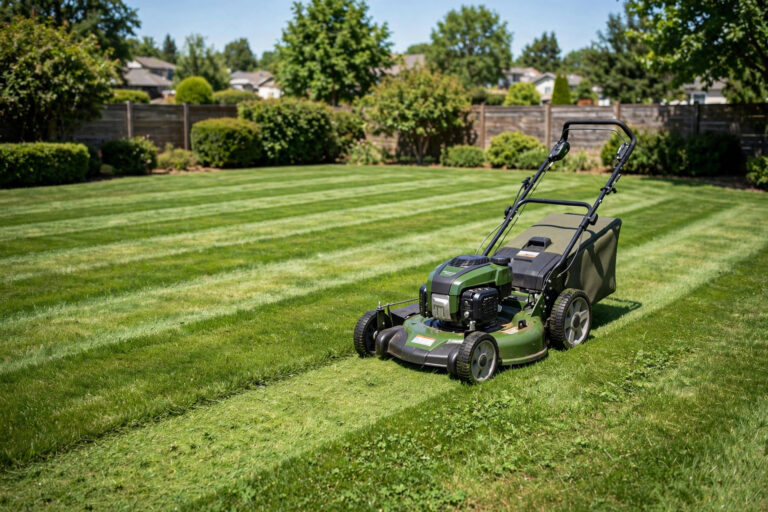
- Mow high and with sharp blades. Taller grass has deeper roots and more resilience; clean cuts heal faster than torn ones.
- Don’t overdo nitrogen in summer. Heavy summer feeding produces the soft growth fungus loves. Save the aggressive feeding for spring and fall.
- Improve air circulation. Prune low tree limbs, avoid overcrowding plantings near the lawn’s edge, and don’t let the grass stay matted under leaves.
- Aerate compacted soil. Waterlogged, compacted soil stresses roots and invites disease — fall aeration pays dividends here too.
The Bottom Line
In Montgomery’s climate, lawn disease isn’t a freak event — it’s a seasonal pressure that needs a seasonal answer. Preventative fungicide programs stop problems before they start, curative treatment halts active outbreaks, and good cultural habits make everything work better. The lawns that look great in August aren’t lucky; they’re managed.
Dealing with recurring fungus, or want to get ahead of it this season? We provide lawn disease treatment and preventative fungicide programs across Montgomery, Pike Road, Prattville, Millbrook, and Wetumpka. Call Lawn Care Montgomery for a free evaluation at (334) 719-0646.
Related reading: not sure what is causing your spots? Start with our brown patches diagnosis guide, then see how a lawn treatment program keeps disease pressure down.